
Boarding
Why Doggie Daycare can be Essential for Breeds That Were Born to Run
Apr
Not all dogs are built the same. Some were bred to curl up beside a fireplace, content with short walks and quiet companionship. Others were bred for motion — for miles of running, chasing, herding, retrieving, and working alongside humans. For these breeds, movement isn’t simply exercise. It’s biology.
Many of the most beloved dog breeds today were originally developed for high-energy work. Border Collies were bred to herd livestock across vast pastures. Labrador Retrievers spent their days swimming through cold water to retrieve game. Australian Shepherds, Huskies, Vizslas, German Shorthaired Pointers, and many terriers were designed to run long distances and stay mentally engaged for hours.
When these dogs live in modern homes — especially homes where their owners work during the day — their natural instincts often have nowhere to go. The result isn’t a “bad dog.” It’s simply a dog whose body and mind were designed for activity that they aren’t getting.
That’s where doggie daycare becomes one of the healthiest solutions a dog owner can provide.
Running Is Part of Their Design
Dogs that were bred to run need consistent outlets for their energy. Without it, many begin to show signs of frustration or anxiety. Owners may notice excessive barking, chewing, digging, pacing, or hyperactivity at home.
These behaviors are often misunderstood as disobedience when, in reality, they are simply the result of a dog that hasn’t had the opportunity to expend its natural energy.
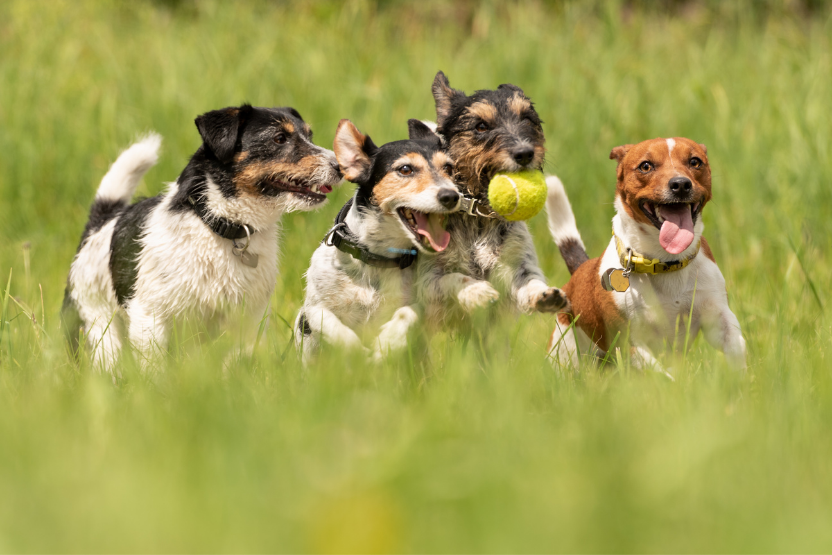
Doggie daycare provides a structured environment where dogs can do what their bodies were designed to do — move. Large play areas, supervised group play, and open space allow dogs to run, chase, wrestle, and explore in a way that short leash walks simply cannot replicate.
For many high-energy breeds, that daily opportunity to run changes everything.
Exercise Improves Sleep, Appetite, and Behavior
Just like humans, dogs function best when their bodies are properly exercised. After a day of healthy physical activity and social interaction, most dogs return home calmer, more relaxed, and more satisfied.
Owners often notice that dogs who attend daycare regularly sleep more deeply at night. Their appetite improves. They become more focused during training sessions and less reactive to everyday stressors.
A dog that has been allowed to burn off its natural energy is a dog that can finally settle into a calm state of rest.
In many ways, exercise regulates a dog’s entire internal rhythm — sleep, eating patterns, and mood.
Socialization Matters Too
Beyond physical activity, daycare also provides valuable social interaction. Dogs are naturally social animals. Learning how to interact with other dogs in a supervised setting helps build confidence, communication skills, and emotional balance.
This kind of healthy socialization is especially important for energetic breeds. When dogs can run and play with others who match their energy level, they develop better manners and burn off excess stimulation in a positive way.
Supervised daycare environments ensure that play remains safe and structured while still allowing dogs to express their natural behaviors.
A Healthier, Happier Dog
At its core, doggie daycare honors something very simple: dogs are animals with instincts, needs, and physical designs that were shaped long before modern living rooms and fenced yards.
For breeds that were meant to run, movement isn’t optional. It’s essential to their well-being.
Providing regular opportunities for dogs to run, play, and interact with others doesn’t just make them tired — it makes them balanced. A dog that can move freely during the day often becomes calmer, happier, and easier to live with at home.
In other words, when dogs are allowed to do what they were born to do, they become the companions we always hoped they would be.